
Proposte di punti maglia dal Pitti filati
Al Pitti filati F7W 27-28 ho preso alcune proposte di punti-maglia esposte tra gli stand (le descrizioni seguono l’ordine delle foto)
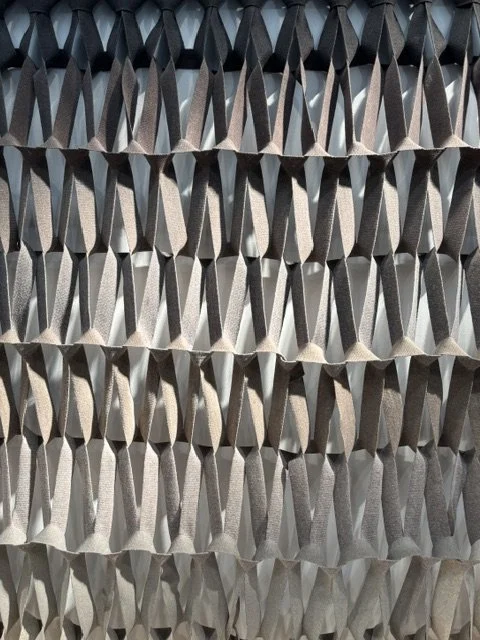
La parete campione per il tipo di trama gigante: non sembra un tessuto in maglia. Conquista nella misura il pattern che costituisce l’effetto rete. Una costruzione di ordine analitico e contemplativo, attraverso una griglia geometria regolare (Filati Millefili)
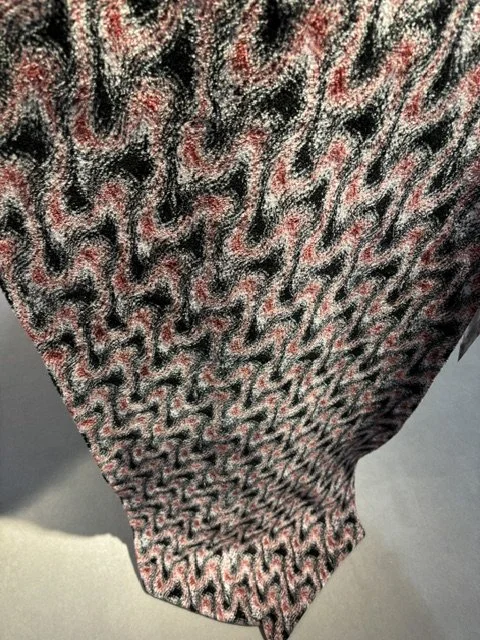
In questo campione seduce l’energia del disegno in continuo movimento, obbliga l’occhio a seguirlo in una leggera instabilità visiva. Un’interpretazione di jacquard, con la presenza vellutata di ciniglia. La richiesta di attenzione anche nel tocco, nella sua geometria mossa (filatura Lineapiu’)
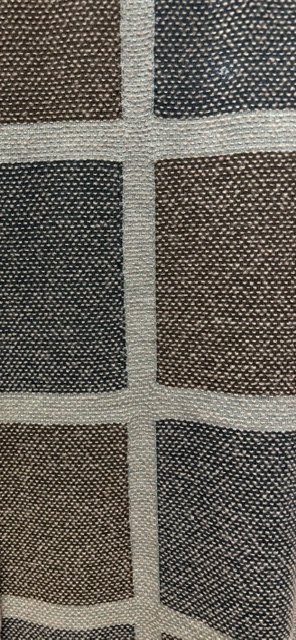
La leggerezza della lavorazione a jacquard, le campiture cambiano colore senza appesantire la mano, anche attraverso la tecnica intarsio. Il disegno è essenziale: costruzione di un motivo grafico senza sacrificare fluidità e comfort. Dal punto di vista estetico le linee sembrano quasi disegnate a mano (Loropiana).
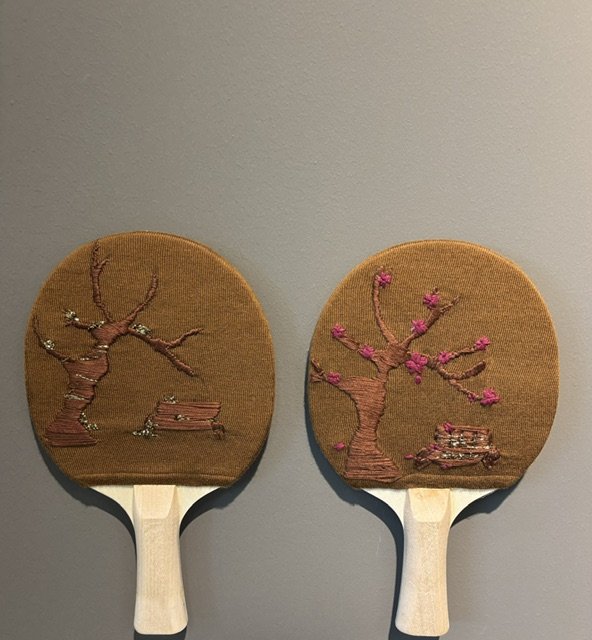
La maglia che diventa linguaggio in un oggetto così inatteso: 2 racchette rivestite in maglia, come supporto di una narrazione. Due immagini che potrebbero rappresentare l’inverno e la primavera, il tempo dell’attesa. Il ricamo come narrazione testimone del tempo (Marchi & Fildi)
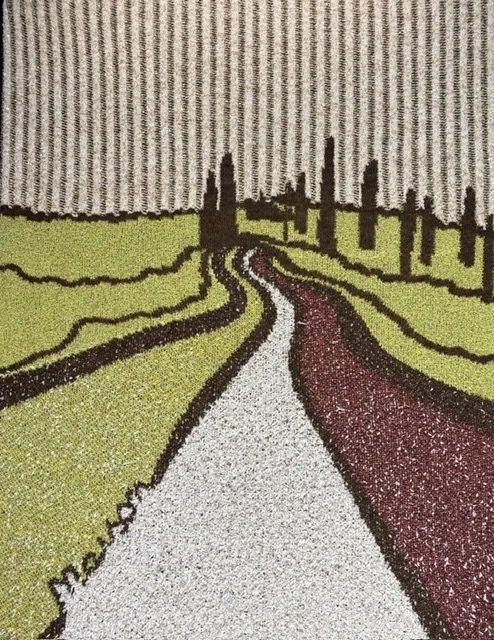
Qui il protagonista è il racconto: sembra voler rappresentare l’idea del paesaggio. La parte superiore è quasi una quinta teatrale. Quelle coste verticali con scarti d’ago, sono un sipario tessile, un filtro da cui emerge l’orizzonte. È un progetto che mette insieme la libertà del disegno e l’intarsio come pittura. Una palette che evita l’effetto “cartolina”.La maglia smette di essere texture e diventa il l’idea di paesaggio che nasce dal filo (non è una stampa). Il tessuto in maglia non cerca di imitare una fotografia (Cofil)
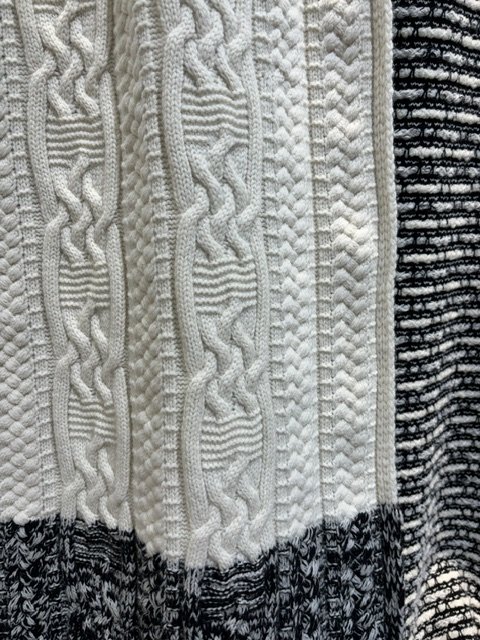
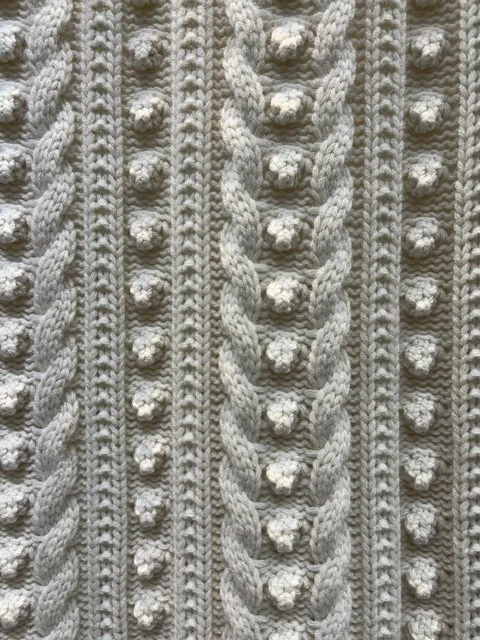
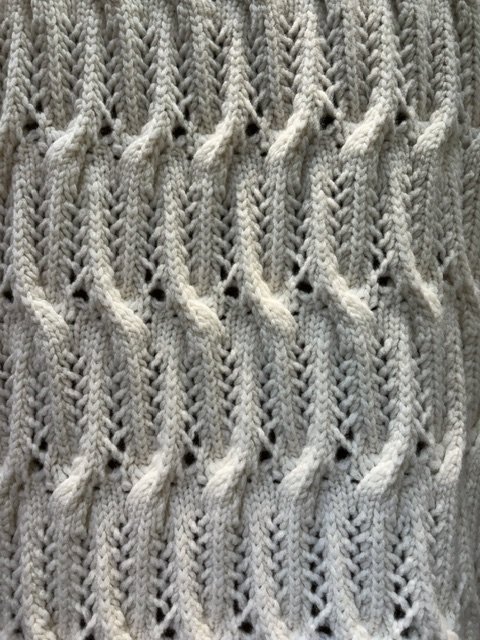
Leggere le superfici: il modo in cui un tessuto usa struttura, materia, luce e ritmo per produrre un’emozione. Il bianco come lente che amplifica il dettaglio: quando il colore si ritrae, emerge la struttura. Ogni costa, ogni intreccio, ogni rilievo non è solo un punto maglia ma un gioco di luce-ombra e ci aiuta ad osservare meglio. La tecnica diventa estetica. L’estetica diventa emozione. Il calore può essere accogliente e dinamico, avere un suo peso e volume. Lo stesso filato può costruire superfici diverse, trattenendo la luce in profondità e movimento. La tecnica serve a produrre un tessuto e a creare sensazioni. La neve insegna al mondo tessile. È curioso come se pensiamo alla neve immaginiamo qualcosa di uniforme. Basta avvicinarsi perché compaiano infinite geometrie. Succede anche per la maglia: da lontano sembra una superficie, da vicino presenta strutture fatte di pieni, vuoti, rilievi, direzioni. Ed è forse per questo che alcune delle lavorazioni in maglia sono più rilevanti proprio nel tipo di interpretazione che ben si adattano al contesto invernale (3 campioni di Millefili)
Knit stitch patterns from Pitti Filati
At Pitti Filati F7W 27–28, I picked up a few knitting stitch patterns on display at the stands (the descriptions follow the order of the photos)
The sample swatch for the giant weave type: it does not look like a knitted fabric. The pattern that creates the mesh effect really comes into its own in this piece. A construction of an analytical and contemplative nature, achieved through a regular geometric grid (Millefili Yarns)
In this sample, the energy of the constantly shifting design is captivating, compelling the eye to follow it amidst a subtle visual instability. An interpretation of jacquard, featuring the velvety texture of chenille. It demands attention even to the touch, with its dynamic geometry (spun by Lineapiu’)
The lightness of the jacquard weave means that the solid areas change colour without feeling heavy to the touch, even when using the intarsia technique. The design is minimalist: creating a graphic pattern without compromising on fluidity and comfort. Aesthetically, the lines almost look as if they have been drawn by hand (Loropiana).
Knitwear that becomes a form of expression in such an unexpected object: two knitted-covered rackets, serving as a medium for storytelling. Two images that could represent winter and spring, a time of waiting. Embroidery as a narrative that bears witness to the passage of time (Marchi & Fildi)
Here, the narrative takes centre stage: it seems to seek to represent the idea of landscape. The upper section is almost like a theatre backdrop. Those vertical lines, created by needle skips, form a textile curtain – a filter through which the horizon emerges. It is a project that combines the freedom of drawing with intarsia as a form of painting. A colour palette that avoids the ‘postcard’ effect. The knit ceases to be merely a texture and becomes the idea of a landscape born from the yarn (it is not a print). The knitted fabric does not seek to imitate a photograph (Cofil)
Reading surfaces: the way in which a fabric uses structure, material, light and rhythm to evoke an emotion. White as a lens that amplifies detail: when colour recedes, the structure emerges. Every rib, every weave, every texture is not just a stitch but a play of light and shadow, helping us to observe more closely. Technique becomes aesthetics. Aesthetics become emotion. Warmth can be cosy and dynamic, possessing its own weight and volume. The same yarn can create different surfaces, trapping light in depth and movement. Technique serves to produce a fabric and to create sensations. Snow teaches the world of textiles. It is curious how, when we think of snow, we imagine something uniform. You only need to get closer for infinite geometries to appear. The same is true of knitwear: from a distance it looks like a single surface, but up close it reveals structures made up of solids, voids, reliefs and directions. And it is perhaps for this reason that some knitted pieces are particularly significant precisely because of the kind of interpretation they offer, which is well suited to the winter context (3 samples from Millefili)
