
Se vuoi capire l'universo, pensa in termini di energia, frequenza e vibrazione. Nikola Tesla
Colori e numeri condividono qualcosa di invisibile: entrambi costruiscono armonie, tensioni, equilibri (ne ho parlato ad una presentazione in libreria a Biella).
Nel design tessile il colore non è mai solo estetica, così come il numero non è solo quantità.
Sono linguaggi simbolici che influenzano percezione, memoria ed emozione.
Un colore si percepisce. Un numero si riconosce. Entrambi a volte, sembrano sceglierci. I colori associati ai numeri.
Il colore come “emozione visibile”. Il numero come “struttura invisibile”
Il colore non chiede permesso per entrare nella tua testa.
“Quando i numeri hanno un colore”
Immaginate di chiudere gli occhi e pensare al numero 7. Per la maggior parte delle persone è semplicemente un simbolo. Ma per alcune (e sono milioni nel mondo) il 7 è verde. Questo fenomeno si chiama sinestesia: una condizione neurologica in cui i sensi si “mescolano”. Chi la vive non sceglie i colori dei numeri, li vede interiormente in modo automatico e coerente. Il 3 potrebbe essere rosa, il 9 blu scuro, l’1 bianco brillante.
Ma non è solo una curiosità neurologica. Esiste un legame profondo e antico tra numeri e colori.
Pitagora credeva che i numeri fossero l’essenza dell’universo. I suoi seguaci associavano i numeri a qualità, elementi e colori. L’1 era la luce, il principio. Il 2 era l’oscurità, la dualità. Nel Medioevo, i sette colori dell’arcobaleno corrispondevano ai sette pianeti, ai sette giorni della settimana e ai sette numeri “sacri”. Non era poesia era cosmologia.
Oggi la matematica e il colore si incontrano nel codice digitale: ogni colore sullo schermo che state guardando è un numero. La bellezza visiva del mondo digitale è una sequenza di numeri.
E poi c’è la sequenza di Fibonacci — 1, 1, 2, 3, 5, 8, 13… — che ritorna nelle spirali dei fiori, nelle conchiglie, nella disposizione dei petali. La natura usa questi numeri per costruire forme che noi percepiamo come armoniose e belle. È il numero che genera la forma, e la forma che genera il colore.
Infine, un esperimento mentale: se doveste dare un colore a ogni numero da 1 a 10, cosa scegliereste?
Non esiste una risposta giusta. Ma il fatto che ognuno di voi abbia una risposta istintiva e immediata, ci dice qualcosa di straordinario: i colori e i numeri parlano alla stessa parte di noi. Quella più antica, più viscerale, più umana. Continua con curiosità e alcuni quiz
If you want to understand the universe, think in terms of energy, frequency and vibration. Nikola Tesla
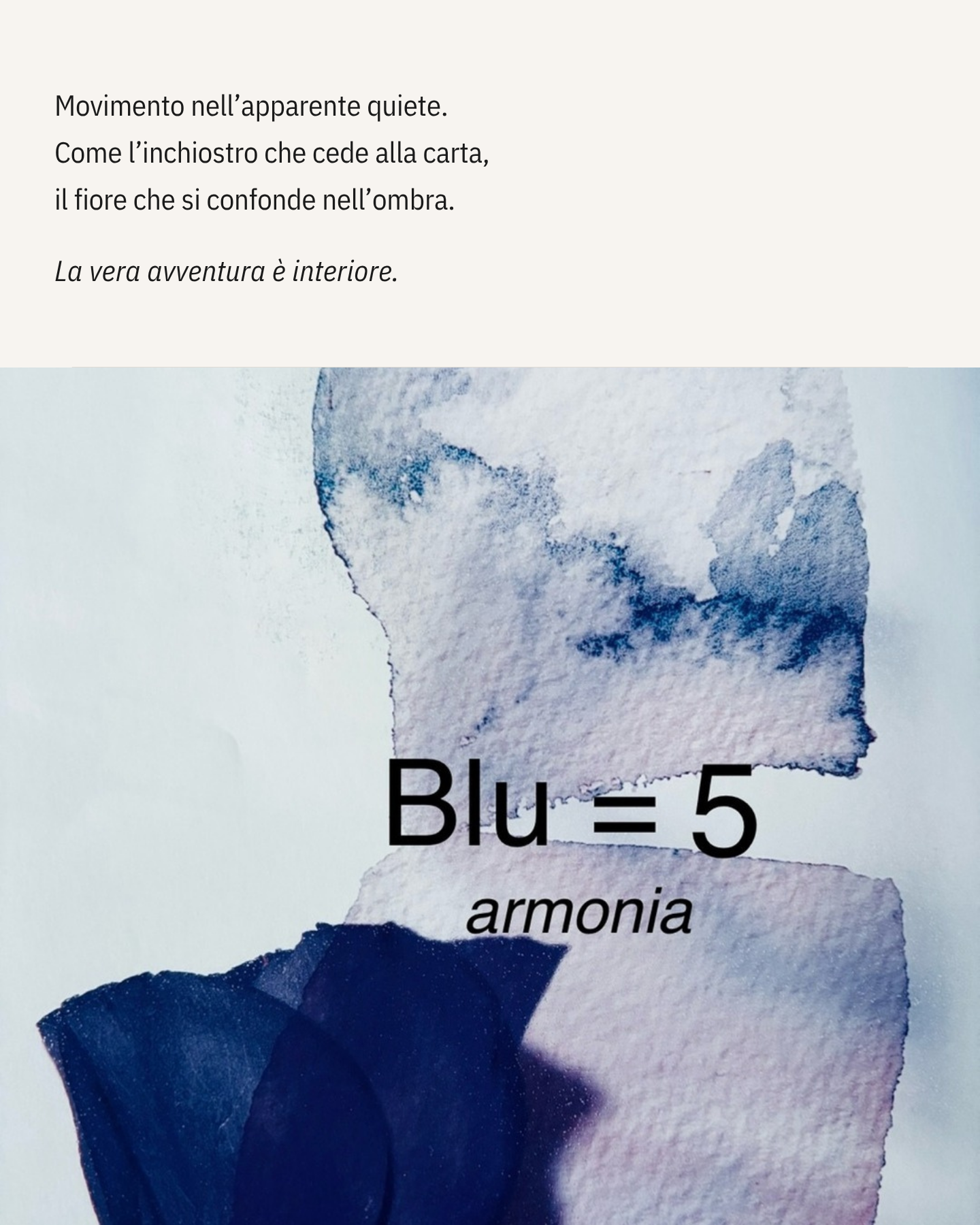
Blue = 5 harmony - Movement in apparent stillness.
Like ink yielding to paper, a flower blending into the shadows. The true adventure is internal.
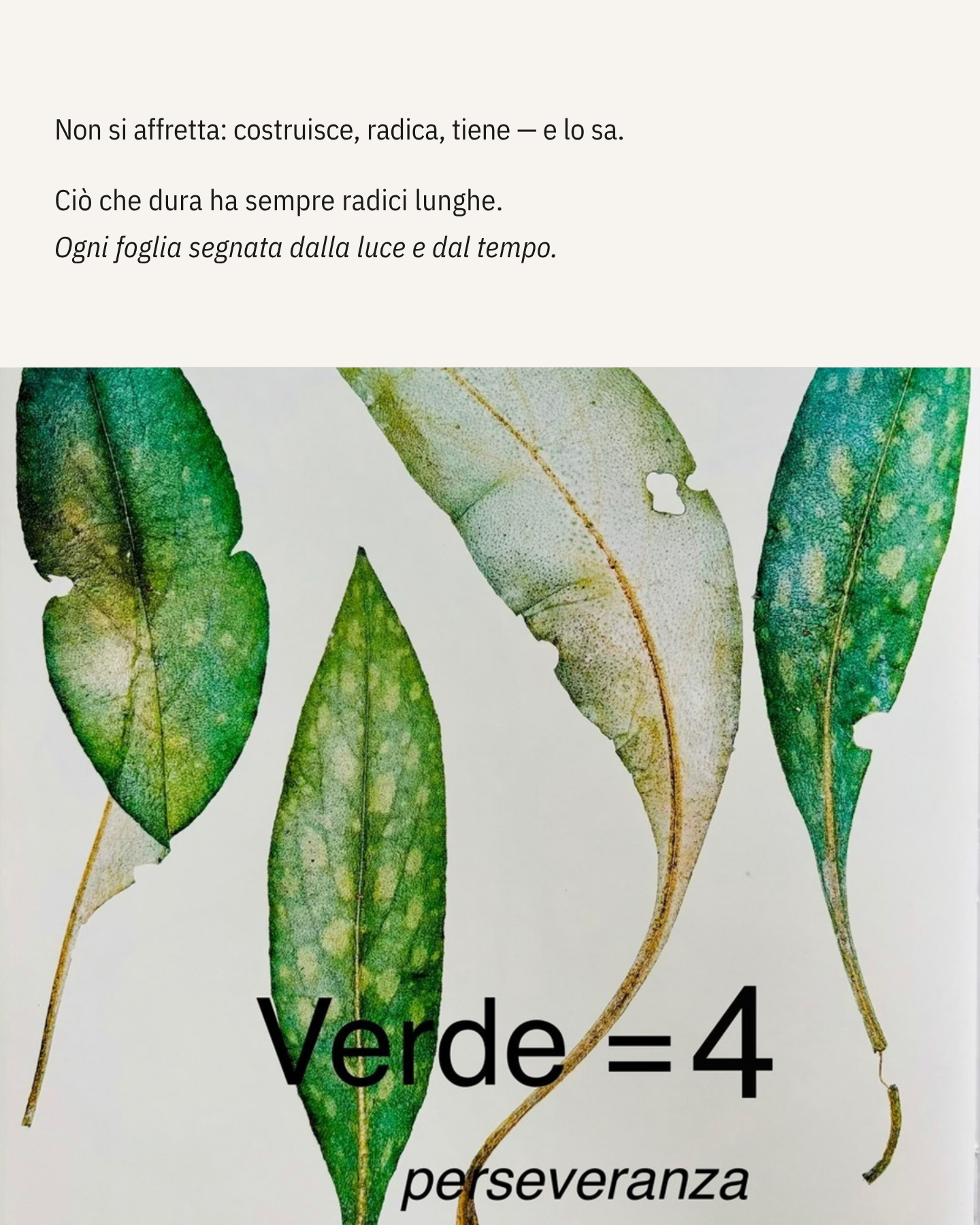
Green = 4 perseverance - It doesn't rush: it builds, takes root, holds firm—and it knows it.
What lasts always has long roots. Every leaf marked by light and time.
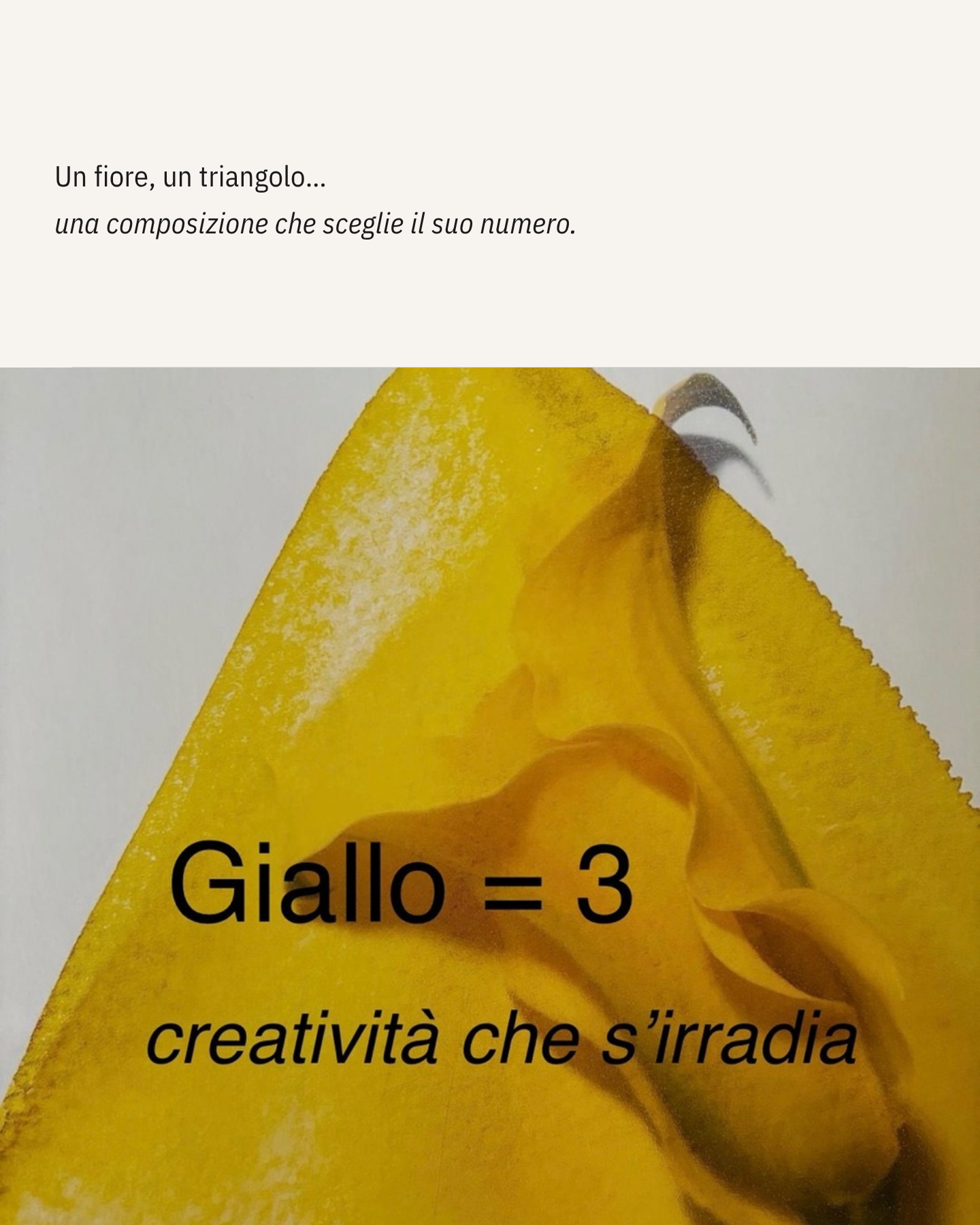
Yellow = 3 creativity that radiates - A flower, a triangle...a composition that chooses its number.
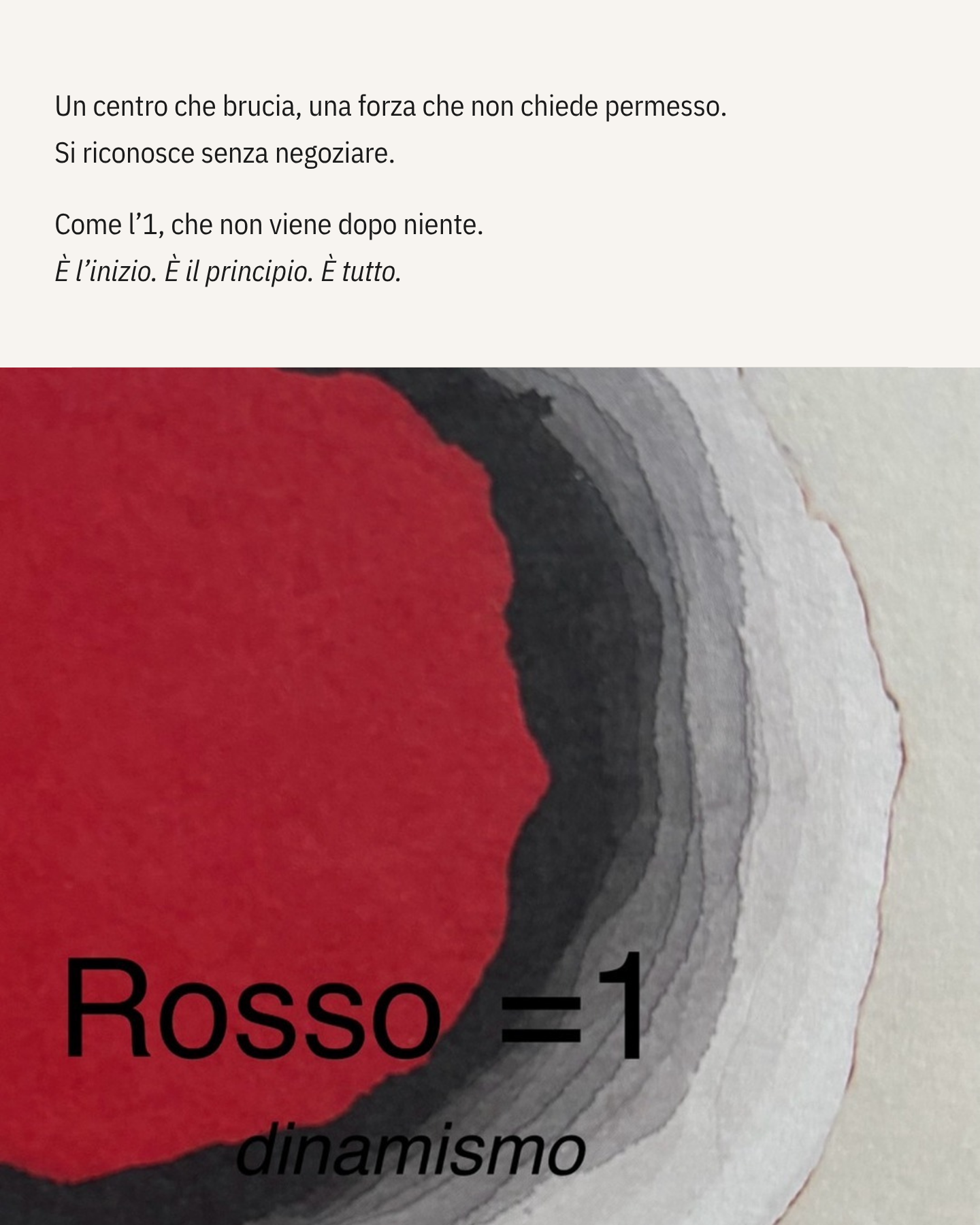
Red = 1 dynamism - A burning center, a force that doesn't ask for permission. It recognizes itself without negotiation. Like the 1, which doesn't come after anything.
It's the beginning. It's the principle. It's everything.
Colours and numbers share something invisible: both create harmonies, tensions and balances (I spoke about this at a book presentation in a bookshop in Biella).
In textile design, colour is never merely a matter of aesthetics, just as a number is never merely a matter of quantity.
They are symbolic languages that influence perception, memory and emotion.
A colour is perceived. A number is recognised. Sometimes, both seem to choose us. Colours associated with numbers.
Colour as a ‘visible emotion’. Numbers as an ‘invisible structure’
Colour doesn’t ask for permission to get into your head.
“When numbers have a colour”
Imagine closing your eyes and thinking of the number 7. For most people, it is simply a symbol. But for some (and there are millions of them worldwide), the number 7 is green. This phenomenon is called synaesthesia: a neurological condition in which the senses ‘blend’ together. Those who experience it do not choose the colours of the numbers; they see them internally in an automatic and consistent way. The number 3 might be pink, the number 9 dark blue, and the number 1 bright white.
But it is not merely a neurological curiosity. There is a deep and ancient connection between numbers and colours.
Pythagoras believed that numbers were the essence of the universe. His followers associated numbers with qualities, elements and colours. The number 1 was light, the beginning. The number 2 was darkness, duality. In the Middle Ages, the seven colours of the rainbow corresponded to the seven planets, the seven days of the week and the seven ‘sacred’ numbers. It was not poetry; it was cosmology.
Today, maths and colour come together in digital code: every colour on the screen you’re looking at is a number. The visual beauty of the digital world is a sequence of numbers.
And then there is the Fibonacci sequence — 1, 1, 2, 3, 5, 8, 13… — which recurs in the spirals of flowers, in shells, and in the arrangement of petals. Nature uses these numbers to create forms that we perceive as harmonious and beautiful. It is the number that generates the form, and the form that generates the colour.
Finally, a thought experiment: if you had to assign a colour to each number from 1 to 10, what would you choose?
There is no right answer. But the fact that each of you has an instinctive, immediate response tells us something extraordinary: colours and numbers speak to the same part of us. The oldest, most visceral, most human part. Continue with some interesting facts and a few quizzes
