
L’oggetto che diventa progetto
Immagina di entrare in uno spazio silenzioso, curato, in cui ogni dettaglio sembra parlare una lingua precisa.
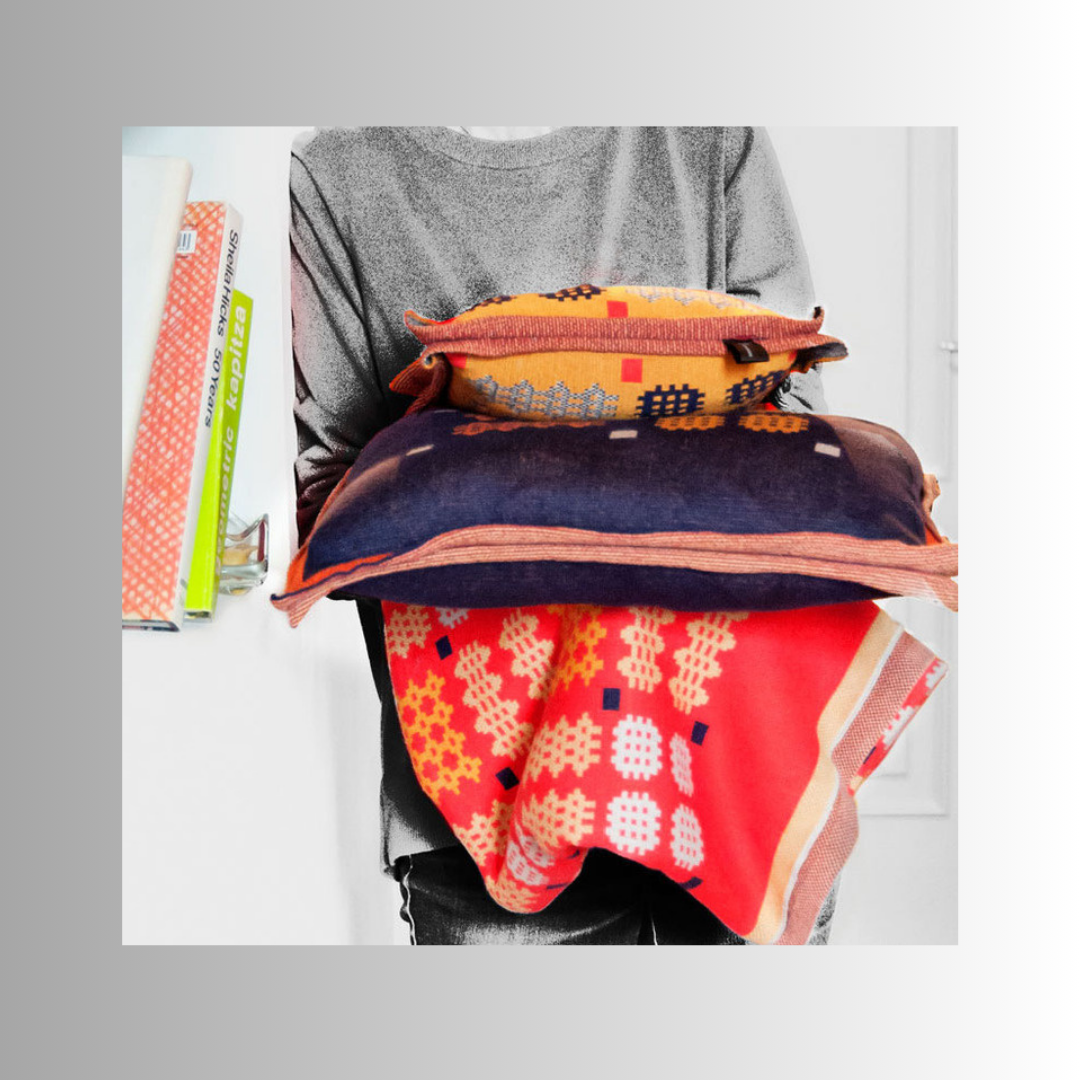
coperte e cuscini in cotone-cashmere
Non è il divano a catturare subito lo sguardo, né l’architettura della stanza: è una coperta. Un oggetto che normalmente considereremmo “secondario”, ma che qui assume lo status di protagonista. Non è un semplice complemento: è un gesto, un’idea di comfort, un frammento di identità.
Questo è il potere degli oggetti tessili quando vengono trattati come opere di progetto e non come accessori.
Una coperta non “arreda” e un cuscino non “riempie uno spazio”: costruiscono un ritmo visivo, invitando al contatto, attraverso la percezione della luce sul colore. Elevare questi oggetti significa liberarli dal ruolo di contorno e considerare l’importanza dell’aspetto materico e sensoriale. Dietro un plaid in cashmere o in lana cardata, non c’è soltanto una scelta estetica: c’è una filiera, una tessitura specifica, una mano artigiana, prove colore, campionature, variazioni di micron, torsioni del filo.
I problemi concreti? Comfort termico, fonoassorbenza, durabilità, con l’unicità di materiali. Parlare di storia e tecnologia allo stesso tempo:il filato decide la morbidezza, la tintura decide l’intensità emotiva, la lavorazione (su macchine elettroniche) la durata. Mostrare queste conoscenze rende autorevoli, perché fa capire che la bellezza non è un concetto astratto ma metodo, scelta, competenza.
Un linguaggio che parla a più mondi. Ogni settore vede lo stesso oggetto attraverso lenti diverse:
Interior designer → cercano coerenza formale, palette, soluzioni su misura
Aziende tessili → vedono innovazione di filato, tessiture, applicazioni
Hotellerie & SPA → leggono in termini di esperienza sensoriale e durevolezza d’uso
Yacht & aviation design → chiedono leggerezza, performance, certificazioni
Clienti privati high-end → vogliono esclusività, personalizzazione, emozione tattile
Un unico oggetto può rispondere a tutti, se la narrazione non è un catalogo ma un ponte: dalla materia al significato, dall’occhio alla mano, dal prodotto alla cultura.
La doppia radice del desiderio: il pubblico si innamora prima con i sensi, poi con la logica. Il tatto crea attaccamento. La conoscenza crea fiducia. Parlare di texture,
sensazioni, micro-movimento del tessuto in un ambiente è essenziale. Un oggetto deve essere sentito. Per essere scelto, deve essere compreso.
English version below
The object that becomes a project
Imagine stepping into a quiet, curated space where every detail seems to speak its own precise language.
It isn’t the sofa that immediately catches your eye, nor the architecture of the room: it’s a blanket. An object we would normally consider “secondary,” yet here it takes on the status of protagonist. It isn’t a simple accessory: it is a gesture, an idea of comfort, a fragment of identity.
This is the power of textile objects when they are treated as design works rather than accessories.
A blanket doesn’t “furnish” and a cushion doesn’t “fill a space”: they build a visual rhythm, inviting touch through the way light interacts with color. Elevating these objects means freeing them from a supporting role and acknowledging the importance of their material and sensory qualities. Behind a cashmere or carded wool throw, there is not only an aesthetic choice: there is a supply chain, a specific weave, a craftsman’s touch, color tests, sampling, micron variations, yarn twists.
The concrete concerns? Thermal comfort, sound absorption, durability, the uniqueness of materials. Speaking of history and technology at the same time: the yarn determines softness, the dye determines emotional intensity, the manufacturing process (on electronic machines) determines longevity. Sharing this knowledge conveys authority, because it shows that beauty is not an abstract concept but method, choice, expertise.
A language that speaks to multiple worlds. Each sector views the same object through different lenses:
Interior designers → seek formal coherence, palettes, bespoke solutions
Textile companies → see yarn innovation, weaving, applications
Hospitality & SPA → interpret in terms of sensory experience and durability in use
Yacht & aviation design → demand lightness, performance, certifications
High-end private clients → desire exclusivity, personalization, tactile emotion
A single object can respond to all of them, if the narrative is not a catalog but a bridge: from material to meaning, from eye to hand, from product to culture.
The double root of desire: the public falls in love first with the senses, then with logic. Touch creates attachment. Knowledge creates trust. Speaking of texture, sensations, the micro-movement of fabric within a space is essential. An object must be felt. To be chosen, it must be understood.
