
Un brand di maglieria, un caso studio brand tessile nella coerenza di prodotto, consulente d’identità di brand
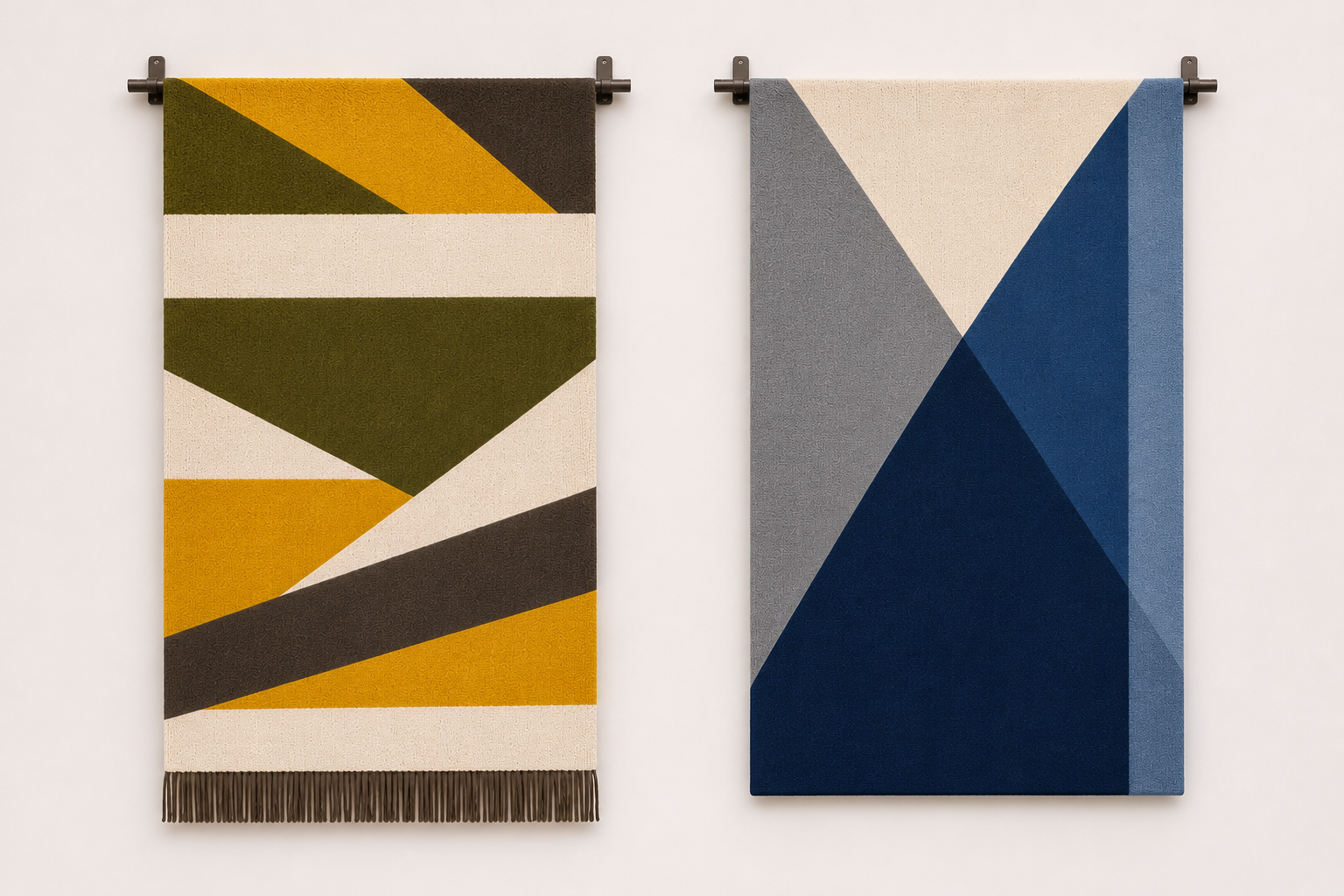
Reinterpretazione dell’AI di 2 miei pattern
Un oggetto, un nome, un logo
Dopo molti anni passati a progettare collezioni donna e uomo, circa quindici anni fa ho fatto una scelta che sembrava un restringimento: un brand con il mio nome e cognome e un logo, "lr", costruito attorno a un solo oggetto. La coperta in maglia, con qualche cuscino a fare compagnia.
Per chi viene dal mondo della collezione, dove le referenze si contano a decine, è una scelta quasi eccentrica. Eppure è stata una buona scuola di direzione del prodotto.
Perché un solo oggetto obbliga alla chiarezza
In una collezione, un errore può nascondersi tra le varie proposte. Con un solo prodotto non c'è dove nascondersi: ogni scelta si vede.
Devi decidere la fibra, la mano, il peso, il colore, il punto, la dimensione, come cade, come si piega, come si regala. Non puoi dire "lo vedrò alla prossima stagione". Il prodotto è anche il brand, e il brand è anche il prodotto.
Cosa ho imparato
1. La coerenza non riguarda la quantità. Un oggetto fatto bene si costruisce per ripetizione di una stessa qualità, non certo per le novità.
2. Il materiale è struttura, non la decora semplicemente. Quando hai un solo prodotto, scopri subito che filato punto e colore non sono tre scelte separate ma una sola scelta vista da tre lati.
3. Un oggetto della casa si giudica diversamente da un capo. Un capo si indossa e si mostra. Una coperta si vive: si appoggia, si guarda, si tocca. Il criterio è "come sta nella stanza".
4. La narrazione va costruita con l'oggetto, non dopo. Il racconto di una coperta (la cura, il tempo, il calore) non si narra attraverso la didascalia: deve essere già nelle scelte di prodotto.
5. L’importanza di costruire un prodotto, affiancandosi a collaboratori capaci d’interpretarlo tecnicamente, definendo l’eccellenza del risultato finale.
Cosa è cambiato nel tempo
Oggi quel brand non è più un negozio online: ho scelto di togliere l'e-commerce e di dedicarmi alla consulenza. Non lo considero una chiusura. È diventato il mio laboratorio: il posto in cui ho verificato, su un prodotto vero, ciò che oggi propongo agli altri.
Cosa significa per chi lavora con me
Questa esperienza mi ha permesso di osservare un prodotto con due sguardi insieme: quello di chi lo progetta e quello di chi lo deve farlo esistere, vendere e tenere coerente nel tempo. Quando un brand mi chiede una direzione, so cosa costa mantenerla.
In particolare lavoro bene con aziende che:
hanno poche referenze e vogliono definirle meglio;
sentono che la collezione ha perso un filo;
vogliono costruire continuità, non solo nuove stagioni.
Se vi riconoscete in una di queste situazioni, scrivetemi: cominciamo da una conversazione breve.
An object, a name, a logo
After many years spent designing collections for women and men, about fifteen years ago I made a choice that seemed like a step back: a brand bearing my first and last name and a logo, ‘lr’, built around a single item. The knitted blanket, with a few cushions to keep it company.
For those coming from the world of collecting, where there are dozens of items to choose from, it is an almost eccentric choice. Yet it proved to be a good learning experience in product management.
Because a single object demands clarity
In a collection, a mistake can be hidden amongst the various items. With just one product, there’s nowhere for it to hide: every choice is plain to see.
You have to decide on the fibre, the feel, the weight, the colour, the stitch, the size, how it drapes, how it folds, and how it looks when given as a gift. You can’t just say, ‘I’ll see about it next season’. The product is the brand, and the brand is the product.
What I’ve learn
1. Consistency is not about quantity. A well-made object is created through the repetition of the same quality, certainly not through novelty.
2. The material is the structure; it does not merely decorate it. When you have just one product, you soon realise that yarn, stitch and colour are not three separate choices but a single choice viewed from three angles.
3. A household item is judged differently from an item of clothing. An item of clothing is worn and shown off. A blanket is experienced: you rest on it, look at it, touch it. The criterion is ‘how it looks in the room’.
4. The narrative must be built around the object, not after it. The story of a blanket (the care, the time, the warmth) is not told through a caption: it must already be reflected in the product choices.
5. The importance of developing a product, working alongside colleagues capable of understanding its technical aspects, thereby ensuring the excellence of the final result.
What has changed over time
Today, that brand is no longer an online shop: I’ve decided to discontinue the e-commerce side of things and focus on consultancy. I don’t see it as closing down. It has become my workshop: the place where I’ve tested, on a real product, what I now offer to others.
What this means for those who work with me
This experience has enabled me to view a product from two perspectives at once: that of the designer and that of the person responsible for bringing it to life, selling it and ensuring its consistency over time. When a brand asks me for guidance, I know what it takes to stick to that direction.
In particular, I work well with companies that:
they have few references and want to define them more clearly;
feel that the collection has lost its coherence;
They want to build continuity, not just new seasons.
If any of these situations sound familiar to you, do get in touch: let’s start with a quick chat.
